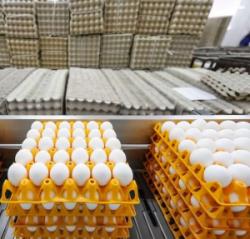
 The volume of exports of shell eggs and products is conditioned by the domestic needs of importers, price against competitors and regulatory disease and logistic restraints. Imports into the U.S. are determined by domestic needs with reduced supply due to flock depopulation as the principal driving factor during the first nine months of 2025.
USAPEEC data reflecting volume of exports for shell eggs and egg products are shown in the table below comparing 2024 with 2025:-
|
PRODUCT
|
Jan.-Nov. 2024
|
Jan.-Nov. 2025
|
Difference
|
|
Shell Eggs
|
|
|
|
|
Volume (m. dozen)
|
75.9
|
60.4*
|
-15.5 (-20.4%)
|
|
Value ($ million)
|
177.5
|
250.0
|
+72.5 (+40.8%)
|
|
Unit Value ($/dozen)
|
2.34
|
4.14
|
+1.80 (+76.9%)
|
|
Egg Products
|
|
|
|
|
Volume (metric tons)
|
23,065
|
19,810
|
-3,255 (-14.1%)
|
|
Value ($ million)
|
105.8
|
103.0
|
-2.8 (-2.7%)
|
|
Unit Value ($/metric ton)
|
4,587
|
5,199
|
+612 (+13.3%)
|
U.S. EXPORTS OF SHELL EGG AND EGG PRODUCTS DURING
JANUARY-NOVEMBER INCLUSIVE IN 2025 COMPARED WITH 2024
*The data published by USDA for shell eggs are slightly different from USAPEEC figures included in this table.
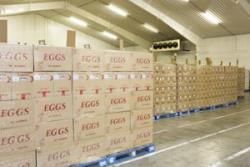 For the eleven-month period Canada was the export destination of 69.7 percent of U.S. shell eggs followed by the Caribbean at 19.9 percent. For egg products the four major importers collectively comprised 79.0 percent of volume with the relative proportions represented by Japan (29.4%); EU, (19.6%); Mexico, (16.1%) and Canada, (15.7%),
According to the USDA Egg Markets Overview, February 6th, shell eggs exported over 11 months attained 52.3 million dozen. This represents the average production of 2.6 million hens or 0.9 percent of the current population of producing hens. All egg products including liquid and dried, attained 66.7 million dozen shell equivalents for a total of 119.0 million dozen shell equivalents over eleven months. Imports over the same period comprised 71.9 million dozen shell eggs for breaking and 40.3 million dozen shell egg equivalents over all product forms for a total of 112.2 million dozen shell equivalents
Net positive trade was therefore 6.8 million dozen shell equivalents
The trade situation during 2026 will be influenced by the needs of importers as influenced by HPAI, an erratic tariff situation, landed price and availability. Since supply has increased in volume with a sharp decrease in domestic price, imports will be curtailed with an expectation of higher exports consistent with a more competitive situation.