The USDA Cage-Free Report covering February 2026, was released on March 2nd 2026.
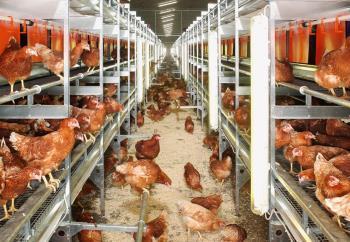 The report documented the complement of hens producing under the Certified Organic Program to be 21.0 million (rounded to 0.1 million), up 20,000 hens or less than 0.1 percent from January 2026. The number of hens classified as cage-free (but excluding Certified Organic) and comprising aviary, barn, free range and other systems of housing apparently increased by 3.9 million hens or 3.2 percent from January 2026 to 125.7 million, attributed to expansion, transition from conventional cages and repopulation of depleted flocks.
Extensive depopulation was carried out as a result of HPAI through January and February 2025 (31 million), but with lower intensity in March (0.2 million) and April (1.0 million) and a single large complex in Arizona during May (3.8 million). Losses reemerged during late September in a caged-bird complex in Wisconsin (3.1 million hens and 250,000 pullets). Additional depopulation occurred in October, (2.2 million); November, 0.5 million; December, (0.2 million); January 2026 (1.5 million) and February (5.0 million).
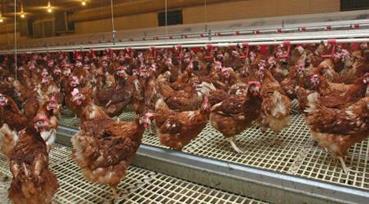 Average weekly production for Certified Organic eggs in February 2026 was up less than 0.1 percent (rounded) compared to January 2026 with a high average weekly production of 83.7 percent. Average weekly flock production for cage-free flocks other than Certified Organic was up 3.0 percent in February 2026, with a high average hen-month production of 82.4 percent. Seasonally placed flocks in anticipation of periods of peak demand increase the availability of cage-free and organic eggs, reflecting pullet chick placements 20 weeks previously.
There is no adequate explanation for the elevated production rates recorded other than the high proportion of young hens reaching peak placed in anticipation of December demand. It is also assumed that almost all cage free flocks are in the first cycle of production with negligible molting contributing to the high average in hen-week values compared to caged hens.
According to the USDA Egg Markets Overview and data from the weekly USDA Shell Egg Demand Indicator, the categorization of U.S. flocks according to housing system among the total of 307.9 million total hens as of February 2026 comprised:-
Caged, 161.2 million (52.3% of total flock);
Cage Free (non-organic), 125.7 million (40.8% of total flock) with 82.7% of this population in barns, 7.6% on free-range and 9.7% on pasture;
Cage Free (organic), 21.0 million (6.8%) with 56.7% of this population in barns and 21.4% on free-range and 21.9 on pasture: or other extensive systems
Losses attributed to HPAI in 2025 comprised:-
Caged flocks, 24.8 million representing 8.4 percent of a nominal 290 million producing hens
Cage-free flocks, 17.6 million representing 5.9 percent of the national flock
Organic flocks, negligible, >0.1 percent
Through the first two months of 2026, hen losses attained 5.9 million in cages and 1.9 million housed in alternative systems.
|
Average Flock Size
(million hens)
|
Average
February 2025
|
*Average
Q3- 2025
|
Average
Q2- 2025
|
Average
Q1 –
2025
|
Average
Q4 –
2024
|
Average
Q3-
2024
|
|
Certified Organic
|
21.0
|
20.0
|
20.0
|
20.4
|
20.5
|
20.0
|
|
Cage-Free Hens
|
125.7
|
115.6
|
108.4
|
103.4
|
104.5
|
103.9
|
|
Total Non-Caged
|
146.7
|
135.6
|
128.4
|
123.8
|
125.0
|
123.9
|
*October and November data was not released to compile Q4 average
|
Average Weekly Production (cases of 360 eggs)
|
January
2026
|
February
2026
|
|
Certified Organic @ 83.7% hen/day
|
341,966
|
342,042 - 0.1%
|
|
Cage-Free @ 82.4% hen/day
|
1,955,847
|
2,013,939 +3.0%
|
|
All Non-Caged @ 82.6% hen/day
|
2,355,981
|
2,355,981 +2.5%
|
On March 2nd 2026 USDA recorded the following National inventory levels expressed in 30-dozen cases (rounded) with the change from January 2026 as a percentage of the total quantity of eggs:-
Commodity shell eggs of all sizes. 1,542,200. (+10.5%)
Commodity breaking stock. 330,400. (-8.4%)
Specialty eggs. 45,100. (+39.1%)
Certified organic eggs. 88,000. (+8.5%)
Cage-Free eggs 461,400. (+5.2%) equivalent to 1.6 days production
|
Average Nest Run Contract Price Cage-Free
White and Brown combined for February 2026
|
$1.73/doz.* (unchanged from May 2025)
|
|
February 2025 Range:
|
$1.55 to $2.10/doz. (unchanged from May 2025)
|
|
FOB Negotiated February price, grade-ready quality, loose nest-run. Price range $0.38 to $0.55 per dozen
|
Average February 2026 Value of $0.57/doz. ($0.63/doz. January 2026)
|
*Essentially a meaningless value
|
Average February 2026 advertisedpromotional National Retail Price C-F, Large Brown
|
$3.67/doz. February 2025 (6 regions)
(Was $3.45/doz. In January 2026)
|
|
USDA Based on 6 ‘Lower 48’ Regions, 1,405 stores
SW, NW, NE, SE, MW & SC.
|
Range $3.49/doz. (SW) to $3.99/doz. (NW)
|
Negotiated nest-run grade-ready cage-free price for February 2026 averaged $0.59 per dozen, up $0.16 per dozen (+37.2 percent) from $0.43 per dozen in January 2026, reflecting a disturbance in balance between demand and supply.
The February 2026 advertised U.S. featured retail price for Large White cage-free eggs over 1,620 ‘Lower 48’ stores in six regions (NW, NE, SE, SW, MW and SC.) was $2.66 per dozen. This compares with 1,424 stores featuring cage-free Large White in January and reflects more promotions as the year has progressed, consistent with lower demand and increased production. The February 2026 advertised U.S. featured retail price for Large Brown cage-free eggs over 1,405 stores in six regions was $3.67 per dozen with a range of $3.49 per dozen in the SW region to $3.99 per dozen in the NW region. The average promotional shelf price was 22 cents per dozen above January 2026 for this category
The recorded average gradeable nest run price of $0.59 per dozen for brown and white cage-free combined plus a provision of $0.60 cents per dozen for packaging, packing and transport, resulted in a theoretical price of $1.19 per dozen delivered to CDs. The average advertised promotional retail prices of $3.67 per dozen for Brown and $2.66 per dozen for white represented retail margins of 208 percent for featured Brown and 123 percent for White respectively. Fewer promotions were offered for Brown compared to White-shelled cage-free by stores reflecting the balance between supply and demand for the two broad categories. Margins are presumed higher for non-featured eggs including pastured and other specialty eggs at shelf prices attaining in excess of $8.00 per dozen in high-end supermarket chains. Retailers are maximizing margins especially on Certified Organic, free-range and pastured categories restricting the volumes of sales, of all categories ultimately disadvantageous to producers and consumers.