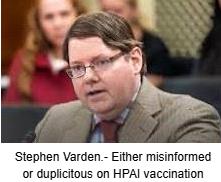
 In a recent interview Stephen Vaden, Deputy Secretary of Agriculture acknowledged the increasing incidence rate of highly pathogenic avian influenza (HPAI) especially affecting turkey and egg production. It is apparent that USDA is justifiably promoting biosecurity as an essential but sole component of prevention
  through a program of farm audits. Producers are encouraged to use the resources of USDA to identify deficiencies in either structural or operational biosecurity and to effect improvements.
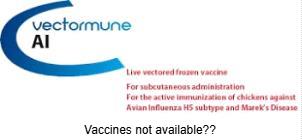
In his interview Vaden stated that “vaccination isn’t available yet.” This is completely wrong and an institutional USDA self-delusion. Major EU biopharmaceutical companies offer a range of vaccines of proven efficacy ranging from conventional inactivated oil emulsion preparations to advanced live,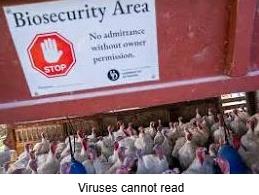 modified vector vaccines suitable for mass administration by in ovo injection
Vaden points to the “Poultry Innovation Grand Challenge” funding 58 projects to combat avian influenza. He further indicated that “vaccine development and rollout will take time”. Again, this is a manifestation of USDA policy of temporizing or opposing immunization as an additional modality in the face of a prolonged U.S. epornitic.
Effectively the USDA continues to make appropriate noises about vaccination but appears to be 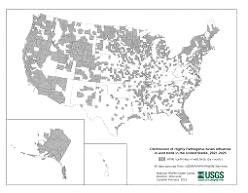 delaying a decision under duress that deploying vaccines against HPAI would impact export of broiler leg quarters. The World Organization of Animal Health (WOAH) has approved vaccination as an adjunct to control and prevent the ongoing HPAI pandemic. Notwithstanding the official position of the Agency, the USDA remains recalcitrant to consider a change in policy to allow controlled, tactical immunization of egg production and turkey flocks in high-risk areas accompanied by high levels of biosecurity and with appropriate surveillance.
USDA should accept reality in that:-
- HPAI is endemic in the migratory waterfowl and marine populations of the world,
- The infection will simply not ‘go away’
- Ongoing HPAI represents a cost to consumers, the public sector and producers far exceeding the value of the potential loss of export revenue from leg quarters
- HPAI is transmitted inter alia by the airborne route effectively invalidating even the strictest biosecurity measures
- Many importing nations accept the WOAH principles of controlled vaccination with surveillance, regionalization and compartmentalization
- H5 HPAI is potentially zoonotic