Genomic sequencing has provided data on the differences in origin of H5N1 clade 2.3.4.4b H5N1 isolates affecting flocks in North and South America respectively. A team based in Argentina in collaboration with colleagues at the University of California, Davis, National Institutes of Health and the Robert Koch Institute in Germany conducted the analyses. It was concluded that H5N1 strains 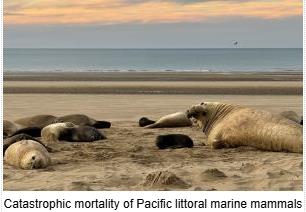 circulating in North America from 2021 onwards represented re-seeding by numerous introductions from Europe and Asia that underwent reassortment with low-pathogenicity avian influenza viruses giving rise to novel genotypes designated B, C and D. It was determined that outbreaks in South America during 2024 were derived from a single introduction of H5N1 virus from North America.
The South America H5N1 introduction resulted in infection of marine mammals with obvious contagion in a number of species of seals and sea lions. This was due to the B3.2 virus acquiring mammalian-adaptive polymerase basic mutations (Q591K and D701N) absent in North American H5N1 isolates.
*Vanstrels, R. et al. Avian influenza A (H5N1) virus Argentina, 2025. Emerging Infectious Diseases. doi.org/10.3201/eid3112.250783.