 The Consumer Price Index (CPI) for December 2025 released on January 13th was unchanged from 2.7 percent in November. This said, the accuracy of the monthly figures may have been distorted by the October federal shutdown. The food-at-home category was up 2.4 percent compared to food- away-from home category at 4.1 percent, reflecting escalation in labor, packaging costs and overhead. Cereals and Bakery products were up 1.5 percent. The Meats, Poultry, Fish + Eggs segment was up 3.9 percent. Within this category, eggs were definitely not a contributor to inflation, given the relatively low wholesale prices that prevailed during December and as compared to 2024. Margins imposed by retailers evidently contributed to unjustified high cost to consumers. As noted, food inflation in December was in excess of the headline CPI. Frozen fish + seafood was up 8.6 percent.
An economist at a major rating agency noted, “Inflation is still uncomfortably high with staples, and necessities remaining elevated. The headline December CPI reading was influenced by a 3.4 percent decline in the price of gasoline. This reflects lower crude prices passed on through the refining infrastructure. Piped gas service was the outstanding increase at 10.8 percent compared to December 2024. This was attributed to high demand during a cold period in relation to regional availability and restraints on distribution. Other categories influencing the CPI included nonalcoholic beverages at 5.1 percent, vehicle maintenance repair (5.4 percent) and tobacco products at 6.8 percent.
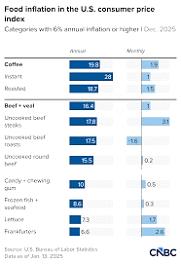
Many of the items with a high rate of inflation, including roasted coffee at 17 percent reflect the effect of tariffs that to date have been largely absorbed by importers and distributors. It is possible that goods inflation will become more apparent later in the first quarter of 2026 as predicted in public comments by voting members of the Federal Reserve FOMC. This has implications for establishing interest rates.