 Shortly after the emergence of bovine influenza H5N1 it was determined that the virus was sensitive to pasteurization but remained stable in raw milk at 4C for an extensive period. A recent study* showed that virus demonstrated enhanced thermal stability in milk derived from infected udders compared to milk from noninfected cows subjected to spiking. Raw milk from infected cows remained infectious for five weeks when stored at 4C with only a two-log reduction in titer. Virus could be detected in stored milk applying PCR assay for up to 22 weeks.
In contrast virus isolates from infected cows when spiked into raw milk from healthy cows yielded virus for only two weeks. Five other influenza viruses spiked into milk from healthy cows showed a similar rapid decay rate.

H5N1 virus derived from infected cows showed slightly higher thermal stability in milk compared to spiked samples in milk from noninfected cows. From a practical standpoint, pasteurization inactivated virus at 63C for five minutes or at 72C for 30 seconds.
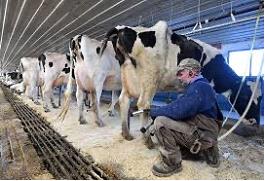 The authors noted that milk derived from infected cows could serve as a vehicle of infection as evidenced by the occurrence of clinical symptoms in farm workers contaminated with infected milk. This has obvious implications for disposal of contaminated milk. The authors could not provide a hypothesis relating to the enhanced thermal stability and persistence of viability in milk from contaminated udders compared to virus in spiked raw milk from non-infected cows.
* Guan, L. et al Stability of avian influenza (A-H5N1) virus to milk from infected cows and virus-spiked milk N.Engl.J.Med 2025: 393:2271-2273 (2025)